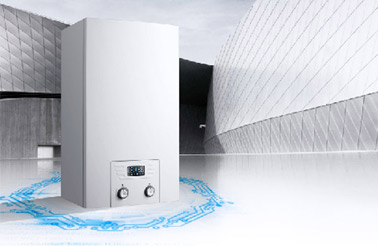
Is the fully premixed condensing wall-mounted boiler noisy?
- Date:2022-06-09 11:41:36
- Views:1
In winter heating and daily hot water supply, fully premixed condensing wall-mounted boilers have gradually become the preferred heating equipment for many households and commercial establishments due to their high efficiency and energy-saving advantages. However, with the increasing demand for their use, many users have begun to pay attention to the user experience of fully premixed condensing wall-mounted boilers. Among them, the question of "Is the noise of fully premixed condensing wall-mounted boilers loud?" has become a frequently mentioned concern during the purchase and use process. After all, whether installed indoors or outdoors, the noise generated by the equipment during operation may affect daily life and the working environment. Therefore, understanding the noise situation of fully premixed condensing wall-mounted boilers is crucial for users.
1. Noise sources of fully premixed condensing wall-mounted boilers: not all noises are "harsh"
To determine whether a fully premixed condensing wall-mounted boiler is noisy, it is first necessary to identify the main source of its noise. The intensity and impact range of noise from different sources vary significantly, and cannot be generalized.
1. Slight noise during normal operation: It is a "normal signal" of equipment operation
During operation, the fully premixed condensing wall-mounted boiler generates certain noise due to the coordinated work of its internal components. Such noise usually falls within the normal range and is relatively low in intensity. For example, the fan produces a slight airflow sound when conveying air; the water pump emits a subtle sound of liquid flowing when circulating hot water; and the combustion system accompanies a faint combustion sound during efficient combustion. The decibel level of these sounds is usually between 35-50 decibels, similar to the soft whispering of daily conversation or the slight noise of a refrigerator running. Under normal installation and usage conditions, these sounds basically do not cause interference to daily life.
2. Abnormal noise: a "fault signal" that requires vigilance
If a fully premixed condensing wall-mounted boiler emits noise that significantly exceeds the normal range during operation, such as sharp, piercing sounds, frequent vibrations, or irregular noises, it often indicates that there may be an abnormal condition with the equipment. Common causes include: dust accumulation or deformation of fan blades, which leads to unbalanced vibrations during operation; wear of internal parts in the water pump, causing frictional noise; blockage of the burner or unstable gas supply, resulting in incomplete combustion and thus explosive sounds; and loose installation of the equipment, which collides with the wall or other components during operation and generates noise. Such abnormal noises not only affect the user experience but can also shorten the equipment's lifespan and even pose safety hazards. It is necessary to promptly investigate and address these issues.
II. Key Factors Affecting the Noise Level of Fully Premixed Condensing Wall-Hanging Boilers
The noise level of a fully premixed condensing wall-mounted boiler is not fixed, but rather influenced by various factors. Users can focus on the following points when purchasing and using the boiler to better control the noise level.
1. Product technology and manufacturing process: determining the "inherent level" of noise
Fully premixed condensing wall-mounted boilers with different technical levels and manufacturing processes exhibit significant differences in noise control capabilities. High-quality products incorporate advanced noise reduction designs, such as equipping with silent fans, which reduce airflow disturbances and mechanical noise by optimizing the structure of fan blades and motor performance. They also adopt shock-absorbing water pumps, adding shock pads between the pump and the equipment body to reduce vibration transmission during pump operation. The combustion system is optimized to ensure full combustion of gas and reduce combustion noise. Additionally, the equipment body is wrapped with soundproof materials to further block internal noise from propagating outside. Conversely, products with outdated technology or rough craftsmanship often lack these noise reduction designs, resulting in more prominent noise issues.
2. Installation environment and installation quality: the "acquired characteristics" affecting noise
The impact of the installation process on the noise level of fully premixed condensing wall-mounted boilers cannot be overlooked. Even products with excellent noise control may experience increased noise levels if installed improperly. Firstly, the choice of installation location is crucial: if the equipment is installed in noise-sensitive areas such as bedrooms and living rooms, even minor noise may be amplified; whereas installing it in relatively independent spaces such as kitchens and equipment rooms, or blocking it with walls and cabinets, will reduce the noise impact. Secondly, the firmness of the installation is of utmost importance: if the equipment supports are not securely fixed, or if the connection between the equipment and the pipeline is loose, significant vibration noise may occur during operation, potentially leading to resonance and further expanding the noise range. Additionally, the layout of the pipeline also affects noise: if there are too many turns in the pipeline, the pipe diameter is unreasonable, or the fixation is not standardized, water flow noise may be generated when water flows through the pipeline and transmitted indoors through the pipeline.
3. Usage scenario and operational load: "Dynamic changes" affecting noise
The noise level of a fully premixed condensing wall-mounted boiler also dynamically adjusts according to changes in usage scenarios and operational loads. During the peak heating season in winter, if the indoor temperature is set lower, the equipment needs to operate at full capacity to quickly raise the room temperature. At this time, components such as fans, water pumps, and burners are all in high-intensity operation, resulting in a relatively higher noise level. However, once the indoor temperature reaches the set point, the equipment enters a low-load operating state, and the noise level decreases accordingly. Additionally, when only using the hot water supply function, the operational load of the equipment is usually lower than during heating, and the noise level is also relatively lower. Meanwhile, prolonged use of the equipment may lead to aging and wear of internal components, which may also result in a gradual increase in noise.
III. How to reduce the noise of fully premixed condensing wall-mounted boilers: practical suggestions for reference
In response to potential noise issues with fully premixed condensing wall-mounted boilers, users can effectively reduce noise and enhance their usage experience through the following methods.
1. When shopping, give preference to products with silent design
When purchasing a fully premixed condensing wall-mounted boiler, users can actively pay attention to the noise parameters of the product, giving priority to those with lower decibel values (usually marked as operating noise ≤50 decibels) and explicitly mentioning silent design. At the same time, they can check whether the product is equipped with noise reduction configurations such as silent fans, shock-absorbing water pumps, and soundproof bodies, and can also refer to user reviews to understand the noise situation in actual use. In addition, choosing products from reputable brands with good reviews ensures better technology research and development and quality control, and the noise control ability is more reliable.
2. Choose an appropriate installation location and ensure that the installation follows specifications
Before installation, it is essential to communicate thoroughly with the installation personnel and select an appropriate installation location based on the structure of the house and usage requirements. It is recommended to prioritize non-living core areas such as kitchens and equipment rooms, and avoid installing the equipment next to bedrooms, living rooms, or in close proximity to resting areas. If the installation space is limited and the equipment must be installed near the living area, the installation personnel can be requested to add soundproof cotton between the equipment and the wall, or install shock pads under the equipment supports to reduce the transmission of vibration noise. At the same time, it is imperative to ensure that the installation personnel strictly follow the product installation instructions, ensure that the equipment supports are secure, the pipe connections are tight, and the pipe fixation is standardized, to avoid noise issues caused by improper installation.
3. Regular maintenance and timely overhaul: avoid the noise "getting louder with use"
Regular maintenance of fully premixed condensing wall-mounted boilers is an important measure to prevent and reduce noise. Users can follow the instructions in the product manual to regularly clean the dust and impurities on the fan blades and burner surface to prevent noise caused by poor operation due to dust accumulation on components; check the lubrication of moving parts such as water pumps and motors, and if there is insufficient lubrication, add lubricating oil in time to reduce friction noise; check whether the pipe connections are loose, and if so, tighten them in time to avoid vibration noise. In addition, if abnormal noise is found in the equipment, professional maintenance personnel should be contacted in time for troubleshooting, to identify the cause of the noise and carry out repairs, so as to avoid aggravating the problem, ensure that the equipment is always in good operating condition, and maintain a low noise level.
IV. Conclusion: The noise of fully premixed condensing wall-mounted boilers is controllable, so there is no need for excessive concern
Overall, the noise produced by fully premixed condensing wall-mounted boilers is not as loud as one might fear. The noise during normal operation is usually within an acceptable range and does not significantly disrupt daily life. Abnormal noise is often caused by product quality defects, improper installation, or delayed maintenance. Through reasonable purchase, standardized installation, and regular maintenance, such issues can be effectively avoided and resolved.
For users, while focusing on the high efficiency and energy-saving advantages of fully premixed condensing wall-mounted boilers, it is only necessary to understand the noise control capabilities of the product in advance, pay attention to installation quality and daily maintenance, and you can enjoy comfortable heating and hot water while minimizing the noise impact. Therefore, there is no need to be discouraged by the noise issue when considering fully premixed condensing wall-mounted boilers. As long as you make good preparations in the early stage and manage well in the later stage, you can fully leverage their advantages and improve your quality of life.