How can pre-mixed condensing wall-mounted boilers achieve low nitrogen emissions and contribute to environmental protection?
- Date:2022-04-13 11:31:05
- Views:5
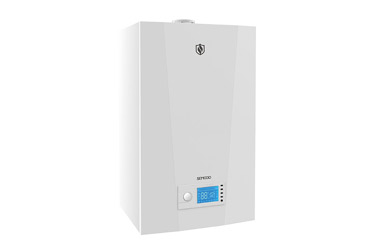
In the context of rising environmental awareness and increasingly stringent emission standards, fully premixed condensing wall-mounted boilers have become crucial equipment in the heating sector for practicing environmental protection concepts, thanks to their **low nitrogen emission performance. Compared to traditional wall-mounted boilers, fully premixed condensing wall-mounted boilers not only significantly reduce energy consumption but also control nitrogen oxide emissions through unique technical design. A deep understanding of the principles behind the low nitrogen emission of fully premixed condensing wall-mounted boilers is of great significance for promoting the green transformation of the heating industry.
1. The core working logic of a fully premixed condensing wall-mounted boiler: controlling the generation of nitrogen oxides from the "combustion source"
The core difference between fully premixed condensing wall-mounted boilers and traditional wall-mounted boilers lies in the adoption of "fully premixed combustion technology", which eliminates the conditions for the substantial generation of nitrogen oxides at the source of combustion. Traditional wall-mounted boilers mostly employ "atmospheric combustion", where gas and air are initially mixed within the burner and then directly burned. In this process, precise control over the air supply is challenging, leading to issues such as "local high temperatures" and "oxygen deficiency". High-temperature environments are a primary factor in the generation of nitrogen oxides, particularly NOx. When the combustion temperature exceeds 1500°C, nitrogen and oxygen in the air react violently, producing a large amount of nitrogen oxides.
The working logic of a fully premixed condensing wall-mounted boiler is completely different: it first passes through a professional premixing device, where gas and air are fully mixed in a precise ratio (typically an optimal combustion ratio of 1:10-1:12) to form a uniform combustible mixture, which is then sent to the burner for combustion. This "mix first, burn later" approach ensures sufficient and evenly distributed oxygen supply during combustion, avoids the formation of localized high-temperature areas, and stabilizes the combustion temperature below 1200℃. This fundamentally reduces the amount of nitrogen oxides generated, laying the foundation for low nitrogen emissions.
II. Three key technologies for achieving low nitrogen emissions: the synergistic effect of premixing, condensation, and precise temperature control
The low nitrogen emission performance of fully premixed condensing wall-mounted boilers is not the result of a single technology, but rather the product of the synergistic cooperation of three major technologies: premixed combustion, condensation heat transfer, and precise temperature control. These three technologies jointly construct a low-nitrogen and efficient heating system.
1. Fully premixed combustion technology: allowing gas to "burn fully and at low temperature"
As mentioned earlier, fully premixed combustion technology is the core of low nitrogen emissions. The premixer equipped in fully premixed condensing wall-mounted boilers adjusts the mixing ratio of air and gas in real time through the linkage control of fans and gas valves, ensuring that every portion of gas can come into contact with sufficient air. This thorough mixing not only avoids local high temperatures but also reduces pollutants such as carbon monoxide produced by incomplete combustion of gas, while improving combustion efficiency. Data shows that wall-mounted boilers using fully premixed combustion technology have a combustion efficiency 10%-15% higher than traditional wall-mounted boilers, and the emission concentration of nitrogen oxides can be as low as below 30mg/m³, far below the national first-level emission standard (50mg/m³).
2. Condensation heat transfer technology: further suppressing nitrogen oxides while recovering heat
Condensation heat exchange technology is another core advantage of fully premixed condensing wall-mounted boilers. It not only enhances energy utilization efficiency but also indirectly aids in controlling nitrogen oxide emissions. During the combustion process of traditional wall-mounted boilers, a large amount of high-temperature flue gas (typically above 150°C) is generated. The heat from this flue gas is directly emitted into the air, resulting in energy waste. However, fully premixed condensing wall-mounted boilers use a condensation heat exchanger to reduce the flue gas temperature below the dew point (typically 50-70°C), causing the water vapor in the flue gas to condense into water and releasing a large amount of latent heat.
The environmental protection value of this process lies in the following aspects: On the one hand, the recovered latent heat can be reused to heat the heating water, reducing gas consumption and indirectly decreasing the total amount of nitrogen oxides produced by gas combustion. On the other hand, the low-temperature flue gas environment can further inhibit the formation of nitrogen oxides. When the flue gas temperature decreases, some of the already formed nitrogen oxides are absorbed along with the condensate water, further reducing the concentration of nitrogen oxides ultimately emitted into the air.
3. Intelligent and precise temperature control technology: dynamically adapts to demand, avoiding "over-combustion"
To ensure the stability of low nitrogen emission status, the fully premixed condensing wall-mounted boiler is also equipped with an intelligent precision temperature control system. This system monitors the heating water temperature, indoor temperature, and the mixing ratio of gas and air in real-time through temperature sensors, and dynamically adjusts the gas supply and fan speed according to the actual heating demand. For example, when the indoor temperature reaches the set value, the wall-mounted boiler will automatically reduce the gas supply and adjust the air mixing ratio to maintain stable combustion under low load conditions; when the heating demand increases, the system will respond quickly and increase the combustion power while ensuring precise mixing ratio.
This dynamic regulation capability avoids the drawbacks of traditional wall-mounted boilers, which either burn at full capacity or shut down, and reduces high temperature peaks caused by "overburning", thereby continuously and stably controlling nitrogen oxide emissions. Even during partial load operation, it can maintain low nitrogen emission performance.
III. The environmental value of fully premixed condensing wall-mounted boilers: not only low nitrogen, but also promoting the implementation of the "dual carbon" goals
The low nitrogen emission performance of fully premixed condensing wall-mounted boilers not only meets the current stringent environmental standards, but also contributes to the development of environmental protection from multiple dimensions, providing support for achieving the goals of "carbon peak and carbon neutrality".
From the perspective of pollution control, nitrogen oxides (NOx) are one of the primary pollutants responsible for environmental issues such as acid rain and photochemical smog, posing significant threats to atmospheric quality and human health. Fully premixed condensing wall-mounted boilers can control the emission concentration of NOx below 30mg/m³, with some products even achieving as low as 20mg/m³, which is far lower than that of traditional wall-mounted boilers (typically ranging from 100-200mg/m³). This can significantly reduce NOx emissions in the heating sector and alleviate regional atmospheric pollution pressure.
From the perspective of energy conservation, the condensation heat transfer technology of fully premixed condensing wall-mounted boilers enables a thermal efficiency of 105%-110% (calculated based on lower heating value). Compared to traditional wall-mounted boilers (with a thermal efficiency of about 85%-90%), it can reduce gas consumption by 15%-20% per square meter of heating area per year. The reduction in gas consumption not only means a reduction in energy costs, but also a decrease in carbon dioxide emissions. According to estimates, a 24kW fully premixed condensing wall-mounted boiler can reduce about 1.5 tons of carbon dioxide emissions per year, contributing to the fight against climate change.
IV. Stability guarantee for low-nitrogen operation of fully premixed condensing wall-mounted boilers: full-cycle control from design to maintenance
To ensure that fully premixed condensing wall-mounted boilers maintain low nitrogen emission performance over the long term, comprehensive control throughout the entire lifecycle, from product design to daily maintenance, is essential. At the design level, high-quality fully premixed condensing wall-mounted boilers utilize corrosion-resistant stainless steel burners and condensing heat exchangers to prevent imbalance in combustion ratio caused by component corrosion, which could affect the low nitrogen emission effect. Additionally, some products are equipped with self-cleaning features that regularly remove ash deposits on the surfaces of the burners and heat exchangers, ensuring stable combustion and heat exchange efficiency.
In terms of installation and maintenance, fully premixed condensing wall-mounted boilers have high requirements for installation environment and maintenance expertise. During installation, it is necessary to ensure that the flue is unobstructed and the air supply is sufficient to avoid incomplete combustion due to insufficient air. In daily use, it is important to regularly check the operating status of components such as gas valves, fans, and sensors, and replace aging parts in a timely manner to ensure precise mixing ratios. In addition, choosing a professional after-sales service team for regular maintenance can effectively extend the service life of the wall-mounted boiler while ensuring its long-term stable low nitrogen emission performance.
In summary, the fully premixed condensing wall-mounted boiler, through the synergistic effects of three core technologies: fully premixed combustion, condensation heat exchange, and intelligent temperature control, controls the generation of nitrogen oxides from the source of combustion while achieving efficient energy utilization. It is an ideal choice in the heating field that combines environmental friendliness and economic efficiency. With the continuous tightening of environmental protection policies and the enhancement of consumers' environmental awareness, the fully premixed condensing wall-mounted boiler will play a more important role in promoting the green transformation of the heating industry and facilitating the implementation of the "dual carbon" goals, providing strong support for building a clean and low-carbon energy system.